


Witch Hat Atelier Episode 5: 20,000 Drawings, One Dragon, and the Production Story English Coverage Missed
Let me decode the honne behind the most-praised six minutes in anime this season.
Every so often a single episode makes the Japanese internet and the English-speaking one stop and say the exact same thing: how did they do that? Witch Hat Atelier’s episode 5 is that episode this season — and the answer to “how” mostly surfaced only in Japanese.
Here’s what the English coverage missed. Let me translate it.
What happens in Witch Hat Atelier Episode 5
Witch Hat Atelier (Tongari Bōshi no Atelier, とんがり帽子のアトリエ) — the manga by Kamome Shirahama, serialized by Kodansha and already adored for some of the most beautiful linework in modern manga — is airing as an anime, which began in April 2026. Episode 5, “The Labyrinth of the Dragon,” streamed on April 27 and aired on TV on May 4, and it detonated as an instant “episode of the year” candidate on both sides of the language barrier.
It’s directed by Ayumu Watanabe — the filmmaker behind Children of the Sea — and animated by BUG FILMS, a studio many Western fans haven’t quite clocked yet.
What Japan is actually saying
In Japanese fan spaces, the reaction wasn’t measured praise. It was disbelief — the specific disbelief of seeing theatrical-grade animation arrive on free TV:
「これ地上波ってマジ!?」 “This is on free TV — seriously?!” — Futaman, fan-reaction roundup, transl. Ren
「すごすぎて笑っちゃったよ」/「映画観てるのかと思った」 “It was so good I laughed.” / “I thought I was watching a film.” — Futaman, transl. Ren
But the part that makes this a Decode piece — not just a “wow, nice animation” post — is the production story that surfaced on the Japanese side, and barely anywhere in English.
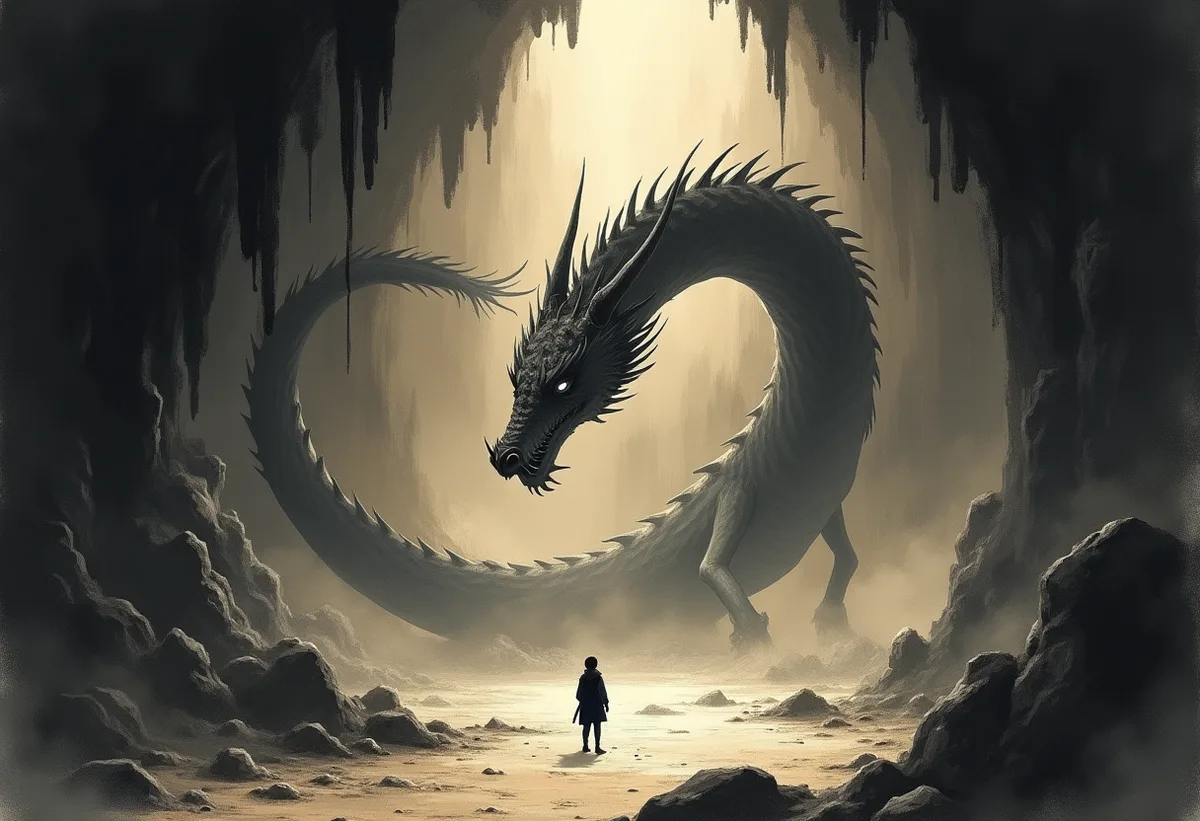
By the Japanese site Futaman’s account, the episode’s dragon sequence reportedly took more than 20,000 drawings, and the production leaned on “film scoring” — composing the music to the finished picture, the way a film does, rather than dropping in pre-made cues. On TV anime, that’s rare and expensive: it means the score was built around the finished animation, not the animation cut to fit the music. And the studio’s representative — BUG FILMS’ own head and the anime’s producer, Hiroaki Kojima — has walked through pieces of the craft himself, on the record.
That’s the layer that never really crossed over: not just that it’s gorgeous, but who pulled it off, and how.
What the West actually said
The English-speaking reaction was, for once, in total agreement with Japan — just without the receipts. Across YouTube reaction channels and English reviews (CBR called it one of the best episodes of the season), episode 5 landed as a clear high point — above all the sequence where the teacher rescues Agott, one of the young apprentices:
“The scene of teacher saving Aggott was straight cinema.” — YouTube comment
“One of the most beautiful episodes of the season.” — YouTube comment
So the verdict is unanimous. What’s lopsided is the explanation.
The gap
Usually in this column, Japan and the West are looking at the same thing and feeling opposite ways. This time they feel the same way — floored — and the asymmetry is somewhere else entirely:
- The West has the awe: this looked like a movie.
- Japan has the awe and the receipts: a quietly serious studio, a film director, a reportedly ~20,000-drawing sequence, a film-scored soundtrack, a producer walking through the craft.
The English internet asked “how is this even TV?” The Japanese internet answered. That answer is the thing worth translating.
Ren’s take
(That’s the reporting. This next part is my opinion, not a fact.)
We’re trained to credit the big, famous studios. What moves me about episode 5 is how much of the credit belongs to a team most Western fans hadn’t been tracking — a studio without a household name to coast on. The most exciting thing in anime right now isn’t a sequel from a marquee studio; it’s a smaller crew deciding that a single TV episode deserved film-level obsession, and then proving it on a weeknight at 11 p.m. If you only clip the dragon and scroll on, you miss the better story: the people who bet that you’d notice.
Why it matters
If episode 5 crossed your feed as a pretty clip, go back and watch the whole thing knowing what went into it — then read the manga it’s drawn from, which has quietly been one of the best-looking books on the shelf for years. The honne here isn’t hype. It’s craft, and the respect it earns at home.
Receipts below, as always. What should I decode next?
— Ren, in Tokyo
Sources
- 日本側ファン反応+制作情報(BUG FILMS/"2万枚"reportedly/フィルムスコアリング) — ふたまん+(一次・2026-05-11)
- 同記事 ミラー — Yahoo!ニュース
- 海外reaction("straight cinema"/"most beautiful episode") — YouTube
- 英語レビュー(best of season) — CBR
- アニメ公式 STAFF&CAST(監督 渡辺歩/制作 BUG FILMS)
- アニメ公式 第5話「巨鱗竜の迷宮」STORY
- BUG FILMS 公式 WORKS
- 原作(白浜鴎『とんがり帽子のアトリエ』講談社・モーニング・ツー)